
03.08.2026

Good Morning,
This is Beach Sloth. Below are this week’s albums:
· Editor’s Note – Moving forward, anything that is abnormally loud and noisy beyond what a ‘reasonable person**’ would subject themselves to will be prefaced with a *Volume Warning*. Thank you.

Carlos Giffoni - Pendulum
To appreciate true beauty, you must first witness ugliness. Carlos Giffoni certainly has plenty of experience with ugliness. His disgusting noise compositions were the thing of legend as he pumped them out, one after the other, for the mid-to-late aughts. I mean this as praise; I love the nasty stuff he did to those modular synthesizers. Right up there with James Ferraro in terms of sheer scale, sheer output, sheer weirdness, then nothing. Sprinkled among those harsh noises were exquisite beauty and an inherent fondness for acid, most notably for his alias No Fun Acid, which felt like Evol’s kindred spirit, engaging in the noise/rave side of things on this side of the Atlantic. Perhaps we as a people require more noisy acid techno. I imagine it does the mind some good, but that could be my personal preferences seeping in.
Carlos disappeared off the map. Nobody saw any of his work for a long while. No Fun Fest, the concert series he founded, stopped. Everyone wondered where this extremely New York City as fuck dude went off to. If you look at No Fun Fest’s website now, that domain has been taken over by an Azerbaijani gambling conglomerate. Baku Hipsters must be pleased at this development, having overtaken internationally renowned sound artists’ space to suck money straight from your wallet. Impressive stuff. His last transmission of Evidence remains probably one of my favorite releases by him, mixing pounding acid with elegant piano work. The contrast between the extreme grace and absolute madness is striking. The track’s long duration only deepens my love of the sound, as it teases a potential sea change in his sound.
In 2018, he returned with Vain. A different side, hinted at before amidst the wretched, vile cacophony, took shape. He got kinder. Not that he ever fully lost his edge, the sort of thing LCD Soundsystem sang about in I’m Losing My Edge. Unlike that protagonist, who advised the likes of Suicide about commercial success, Carlos worked in a different sphere. Suddenly, Carlos’s work became refined, the caustic influences of yore there, but sculpted. I will be honest, Vain was a good work, but I was not quite ready for what he would do about eight years later with Pendulum.
Aptly named, Pendulum represents a dramatic shift away from his origins. I guess he is on a quest now. Released by Room 40, the songs are beautiful in the literal sense. People who knew his origins would be shocked at how lovely they are. Noise remains, but its use is extremely tasteful, and I can say with confidence that the volume warning that would usually be an obvious part of his usual output is absent. For me, he’s come such a long way that it is genuinely inspiring to see how far he has come. Collaborations run throughout the album, with Zola Jesus making an appearance. Pieces here have more in common with OPN’s early output than anything else. Other moments go for this dreamy (yes, dreamy used for Carlos’ work, 2026 is a weird year, man) aspect. Melodies, always there, are front and center stage. The results are sweeping. Even for the finale, Whirlwind, my favorite and by far the noisiest piece on here, the experience is different. Yes, there are distorted glitch effects, but he’s learned from Keith Fullerton Whitman and Zbigniew Karkowski on how to pull back.
Way out of left field, the album presents a new side of Carlos Giffoni, almost three decades after he started. It is wild the odd journey he’s had, and it is great to have him back.
*Volume Warning*
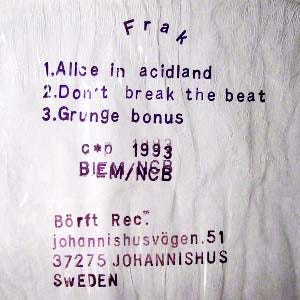
Frak – Alice in Acidland
A formative experience for my musical future began in a decent-sized theater in 1993. I was watching the earliest traces of Paul Thomas Anderson’s work, specifically Mortal Kombat. Unlike his later films that explored concepts about alienation, redemption, and loneliness, Mortal Kombat was about kicking ass and taking names. To wit, later, Paul Thomas Anderson (then known simply as Paul Anderson) would pretend to be American instead of British and add his middle name to distance himself from his earlier, more violent video-game works. For me, I can’t think of something that influenced my musical tastes even to this day. Was the dialogue good? No. Did the plot make sense? No, but this has never been Paul Thomas Anderson’s forte. However, that blaring, obnoxious, and tacky acid techno music stayed with me, decades after I first saw the film. Have I seen the 1993 Mortal Kombat movie since its debut over thirty years ago? No, because the movie is ass.
The 90s, for those too young to have been born during that wild and crazy time, made little sense. Generation X ran the culture with a mixture of apathy and total lack of ambition. Unlike generations before or since, Generation X essentially contributed nothing to long-lasting culture. Which is fine, not every generation needs to do that, especially following the massive ego that was the Boomer generation, a generation notorious for continuing to run politics internationally, even as they flirt with death and dementia on the world stage. One may say we are currently living in the Idiot Plot era of Politics, where all major conflicts could easily be resolved if everyone in leadership positions were not a worthless idiot. Sadly, every single one of them is.
Generation X, to their benefit, understood how to have fun. The second summer of love, documenting rave culture and the nascent origins of shoegaze, took place in the UK. I will assume they had fun, perhaps too much, given the buttoned-up hegemony of blandness that was Britpop. We could have had transcendental rave-shoegaze hybrids, but, outside of a handful of Warp Records albums, such a thing never happened. Fortunately, though, just because acid techno fell off does not mean it was entirely for nothing or completely forgotten. Thanks to a few diligent crate-digging weirdos worldwide, they have reintroduced that hedonistic life form back into the wild.
Frak was one of those early Swedish success stories of Acid Techno. Still reeling from the shame of having unleashed Abba upon the world, Sweden was looking for ways to make up for this seemingly unforgivable sin. Colonizing their neighbors and attacking Russia in the past centuries were entirely forgivable transgressions. Colonization happens, even to Scandinavian countries, but Abba, with all their bullshit, that would take a bit more. Of all the late-80s/early-90s experimental electronic acts, Frak was the least like Abba. Unlike Abba, they played difficult, dissonant music that adhered to nothing but the sound of machines, so weird that they made themselves high.
Alice in Acidland is one of those releases. Usually, an acid track can last a few minutes, maybe a little beyond the seven-minute mark for the more dancefloor-friendly variants. Seventeen minutes of knob-twiddling madness, that’s less a dancefloor-friendly track and more of an escape from the physical limitations of reality. The song becomes ever more frantic and insane with each passing moment. When that deep in the red beat hits, that’s probably the most accessible part. Later, it becomes maddening, with acid lines so acidic they could digest food in your stomach. It goes on for almost the entirety of the original EP, and that’s a good thing. The track rules, and it is a dirty shame that it was on a 200-vinyl press, limited-edition off the Börft Records imprint. Besides that track, the other two are no slouches, but an extended acid techno answer to Velvet Underground’s Sister Ray, right down to the run time, it is kind of a hard act to follow.
Years later, the rave and post-rave aesthetics that Frak embodied would return. The project would eventually be of note to post-rave hooligans like Evol with their noise/acid aesthetic, and eventually inspire a whole new cadre of acid techno pointillists such as TCF, Andreas Tiliander, and a bunch more. By 2014, the world was ready for the re-release of Alice in Acidland, which was again released via a Swedish label, this time iDEAL Recordings. This second re-release also included a left-on-the-cutting-floor jammer, which is far more straightforward in its dance-friendly ambitions than the discorporate whimsy of that initial opener. For a sound that virtually screams late 80s/early 90s, the whole of this release stacks up quite nicely, and shows that era-specific approaches to sound, when executed well, can withstand the test of time.

Dagmar Zuniga - In filth your mystery is kingdom / Far smile peasant in yellow music
Dagmar Zuniga offers a challenge to AI with In filth your mystery is kingdom / Far smile peasant in yellow music – I double-dog dare you to make music as beaten and bruised as these ferric-destroyed folk odes. Beyond strange, the Nicaraguan-born artist ensures she remains unknowable. For those interested, here is her Instagram; none of it is decipherable except the M line at Knickerbocker Station. Honestly, the M line is the most mysterious subway line in all of New York City, despite being an above-ground line. When does it run? Nobody knows. Why does it exist? To serve the equally unknowable, scatterbrained borough of Brooklyn, which goes from affordable to flirting with death himself, who probably lives in Brooklyn Heights, having inherited a Carriage House that they constantly renovate despite having no friends. Why is Knickerbocker Avenue named after a Warner Bros. Looney Tunes reference from the early 1940s? Again, pure enigma. On the less coherent side of things are Instagram photos of peanut butter and jelly sandwiches, the inside of a Brooklyn-based pre-war apartment where she’s about to cook a fish, some random guy bound by chains, you know, typical New York City fare.
The recordings’ damaged nature makes sense. Beyond hurt, these are lo-fi recordings thrown around quite a bit. She recorded them to cassette tape, and you can hear it. Rhythm, melody, and cohesion are besides the point. Listening to them is to listen to dreams and to surrender to the dream logic she imbues them with. Her voice goes forward and backwards whenever it feels like it. You must simply go with it. She has a delicate affect to her vocals, making them feel akin to the spaced-out hippie movement of Laurel Canyon. As the famous Mothers of Invention album We’re Only In It For the Money, “If he didn’t get ya in Laurel Canyon, he won’t get you here.” Given how Brooklyn was in the late 60s, if they couldn’t handle Laurel Canyon, they were unable to handle the sheer ferocity of the post-industrial blight of Brooklyn, before hipsters were even born.
Songs on here have a lot in common with tape music and folk traditions. These are painfully, unbelievably lo-fi. Zuniga’s always been interested in the relatively subdued nature of degraded sounds, even back at the beginning of her recording process with freakbathesank in 2017, which explored similar themes. She got happier with dagmar vork, almost twee-pop even, before the ancestor of this album emerged in 2020 with Suffer Fruit Demos. After that run, she maintained radio silence for six years before releasing this album. It took a while for the brittle delivery and near-broken musique concrete take on hymnals to find an audience. A handful of individuals on here have been exploring similar territory for some time, Zach Phillips essentially establishing such a scene with his famous Olde English Spelling Bee before he, too, allowed the degradation of sound to become an instrumental band partner in his band of one. Musicians like Jessica Pratt feel akin to a hi-fi stereo system compared to the bare bones, raw ethos that dominates all of Zuniga’s album. The way Zuniga destroys the fidelity of sound makes her the William Basinski of folk, letting the tape’s destruction and brittle quality play a critical role in how it is executed. She wants the failure recorded on tape for the listener to hear. Cindy Lee’s dreamy, transmitting-from-another-dimension aspect is on full display, and I am glad that the escape-from-reality musical genre I have been longing for is finally here.
Fortunately, these broken aspects of her music, along with the undeniable exquisite beauty of the dream-inducing soundscapes, attracted some attention. Going far outside of her usual pay-what-you-can, I recorded a cassette of this that I can send to you. This release is going to get the proper attention and treatment it deserves. The good fellows over at AD 93 are going to give this a proper release, with vinyl, CD, and, of course, tape cassette. Yes, they are familiar with otherworldly sounds over there, having housed the persecuted nonsensical musings of Cocteau Twins singing whatever made-up language they sang in. Here, at least, you can mostly understand what Zuniga is singing, even if it is treated like sandpaper to a cassette, warbled and abused. It is still decipherable, at least in that respect.
It is rather nice to see a wider audience for her work. For far too long, she’s been ignored, which is a shame when so much ink has been spilled over meaningless bullshit artists. She is now a resident of NTS Radio. Things change, sometimes even for the better.
*Volume Warning*
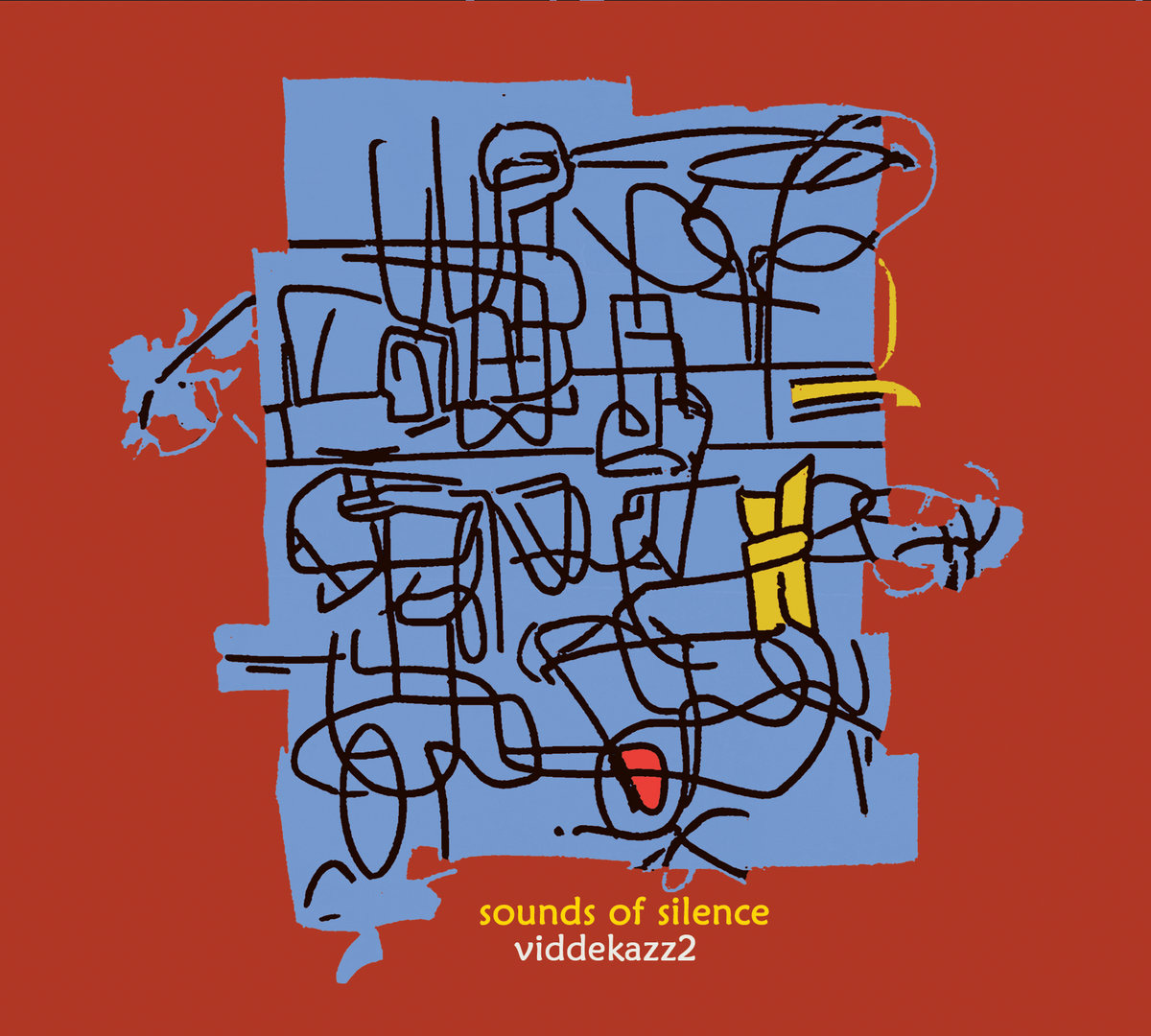
viddekazz2 - sounds of silence
Grindcore, punk, free jazz, noise, all of these can be felt in the intense volcanic churn of viddekazz2’s sounds of silence. The irony is thick with this Tokyo-based duo. Nothing here is silent. You get cacophony, repeatedly, endlessly, for almost a full half-hour. Occasional moments show how good the group is at laying down some grooves, even if they are hidden within seas of distortion. Deadpan vocals have more in common with subliminal messages than anything else. Who knows what they are saying, and honestly, who cares? They are trying to infiltrate your mind. You should let them; they appear to be quite diligent at getting this done.
When listening to this, I am reminded of the early releases by Melt Banana, but with kinder, less abrasive vocals. There’s also no bass to speak of; you just get the guitar and vocals of Miyano. Kick-C on drums, and for these two, it is more than enough. Sometimes they go way out into left field, and there seems to be this desire to fuck with the listener. On CHILD IN TIME they even have an acoustic guitar for the first half. After that, though, they unleash hell on Earth with an unholy racket that is completely outstanding. What does this mean? Does it even matter if it sounds this absolutely mind-melting?
Besides, this leads to the centerpiece of the entire album, the sprawling, massive TOP OF THE WORLD. Clocking in at an unbelievable 18 minutes on a 28-minute album, it is a blast. I cannot imagine how lucky the good people in Tokyo are to experience what this must be like in person, as there is a sweaty, psych-noise, animalistic fury that runs through it. Additionally, is it catchy? I have no idea how, but man, TOP OF THE WORLD sounds akin to pure, unfiltered, and unsquashed liberation. Miyano’s guitar goes for this transcendent aspect that brings it close to Mainliner’s sheer intensity and insanity. Really, this track is such a blast; this is what fun sounds like when it is done by two psychotic Japanese noise-punks. Japan has a rich history of noise, psych, and punk, so seeing it so perfectly embodied in a new group (this is their debut) is an extra thrill, seeing the green shoots of something new from a scene I was already inclined to like. Eventually, this cacophony transforms into a massive, unruly drone, with the drums and guitar disappearing and reappearing whenever they damned well feel like it. Underneath the sheer chaos of everything happening at the same time, they never lose sight of the initial riff, which is tortured in ways prohibited by the Geneva Convention. You can really lose your mind listening to stuff like this. They certainly did. Out of seemingly nowhere, they pull it all back, and you are given an easy-going jam session, which again, is super-disorienting. Rarely have I heard a track so gleefully mess with the listener, so kudos for that. Nothing here is remotely predictable in any sense of the word.
For a new group that just came together, this is doubly impressive. The group, San Francisco-based folks at Public Eyesore Records, did the world a favor in unleashing this beast onto the unsuspecting world. Why did an obscure record label like this one start in the late ‘90s in the middle of nowhere, Iowa? Well, perhaps they were an Iowa Writers Workshop refugee, looking to add some better music into the world. If that is the case, then god bless, you are doing your Norwegian stock (see I looked up what Decorah was known for, and it was for Norwegian immigrants familiar with the frozen wasteland, hence their acceptance of frigid northern Iowa), proud.
Play loud, play unbelievably loud. Get lost in the volume, in the cacophony, because that is what they want, and they’ll always sing to you at a reasonable level. Their instruments, however, that’s a whole other story. Hopefully, I can hear more from these rapscallions.
Questions, Comments, and Concerns:
Please email me at beachsloth32@gmail.com
Want to support me financially?
Please PayPal me at beachsloth32@gmail.com
Throne
Throne | Beach Sloth | My Wishlist
**Your idea of a reasonable person, music-wise, I’m sure, differs from mine. **Still, if you’re already here, you’re already unreasonable by sheer virtue of your attendance, and I thank you for that. **
Last.fm
"Unlike generations before or since, Generation X essentially contributed nothing to long-lasting culture." Shots fired! I'll have my rebuttal summer 2027.