
04.12.2026
Music Review

Good Morning,
This is Beach Sloth. Below are this week’s albums:
· Editor’s Note – Moving forward, anything that is abnormally loud and noisy beyond what a ‘reasonable person**’ would subject themselves to will be prefaced with a *Volume Warning*. Thank you.
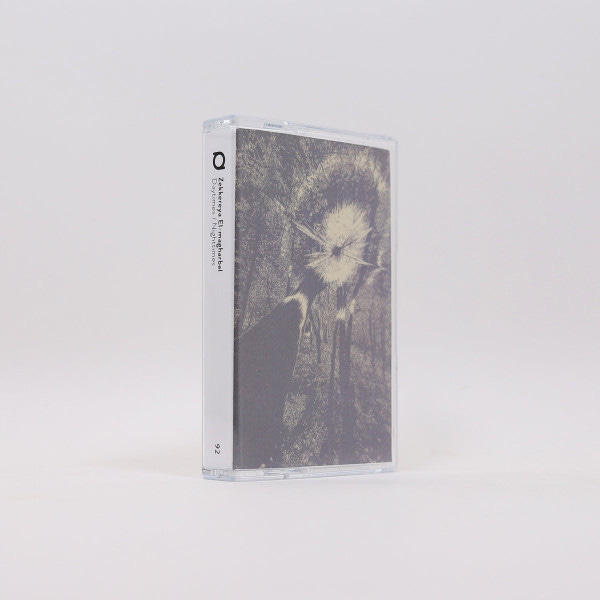
Zekkereya El-magharbel - Daytimes / Nighttimes
The ancient and the modern combine as one in Zekkereya El-magharbel’s yin-yang of Daytimes/Nighttimes. With two instruments, Zekkereya finds the similarities that coincide in elegant, mathematical ways. A trumpet sampled by the Roland SP-404. Up to 24 patterns can be quantized within the SP-404, nicely dovetailing with the Islamic 24-steep tuning, thus bridging the gap between Western tuning using the tech of this very moment. Or rather, this general period, as the SP-404 dates to the early aughts and was highly influential on the lo-fi hip-hop genre. Since so much hip-hop samples Arabic music, including some absolute bangers, it is perhaps right that the sampler is used in the service of Arabic music. Is this a perfect solution for emphasizing tuning models outside of our current frame of reference? No, but the approach is at least a step in the right direction.
Zekkereya, straight out of Michigan, proves to be a skilled trumpeter. The patience to write two pieces that embody peace, each one a half-hour long, makes it a nice fit for the overall Dinzu Artefacts very pro-cassette culture. Yes, there are occasional vinyl releases by Dinzu, but they are rare. Besides, cassettes lend themselves better to long, extended cuts than vinyl, and mastering cassettes is overall cheaper. The SP-404 does feel like a natural fit for cassette culture, too, given how the lo-fi aesthetic has embraced recording methods almost completely forgotten. I have a cassette player, and reintroducing it to the wild, knowing nothing will interrupt it, is one of the main advantages I see to using the technology. Art does not need to be prohibitively expensive as a cover for money laundering. Sure, lots of art does that, which is why Jeff Koons made a living from art, but it is not the sole reason. That gutted and oppressive Soviet industrial base wasn’t going to launder itself!
By far the most readily accessible of Zekkereya’s limited works, the rest are available on his Bandcamp, and it even got a rare reissue. Outside of his solo work for the trumpet, where the fidelity of the recordings makes it reminiscent of the Caretaker’s Ballroom dancing (hey, the ballroom era really enjoyed the trumpet for some reason), Zekkereya is also a member of the Pan-Afrikan Peoples Arkestra. While the trumpet is what he excels at and is the easiest to give him kudos for, as it is a tangible instrument, his abilities with electronics add to the hallucinatory aspects of the atmosphere. Yes, the trumpet he plays with even looks cool and feels timeless, but he’s from Michigan, Michigan is not ancient, not yet anyway. In time, though, their car industry will feel as if it were transported from an era when economic activity was based on physical products rather than whatever was pulled out of thin air. Again, wild how economic systems used to be centered on tangible things rather than pure abstraction. Oh well.
Daytime is the kinder of the two pieces. Nighttime flows out from the Daytime, going for these echoes of valleys. The attention to drone and tuning systems means that both pieces are surprisingly emotional despite their abstract nature. He imbues both with distinctive personalities, and, while Daytime is the more immediately accessible, Nighttime has a haunted quality. Within these two pieces, it is also hard to pinpoint exact gestures, as they have been filtered into this ringing aspect, harkening back to his own roots in the Arabic world, one he continues to explore, as recently as his Cairo Sessions Volume 1. Somehow, he makes the two pieces really stick with you.
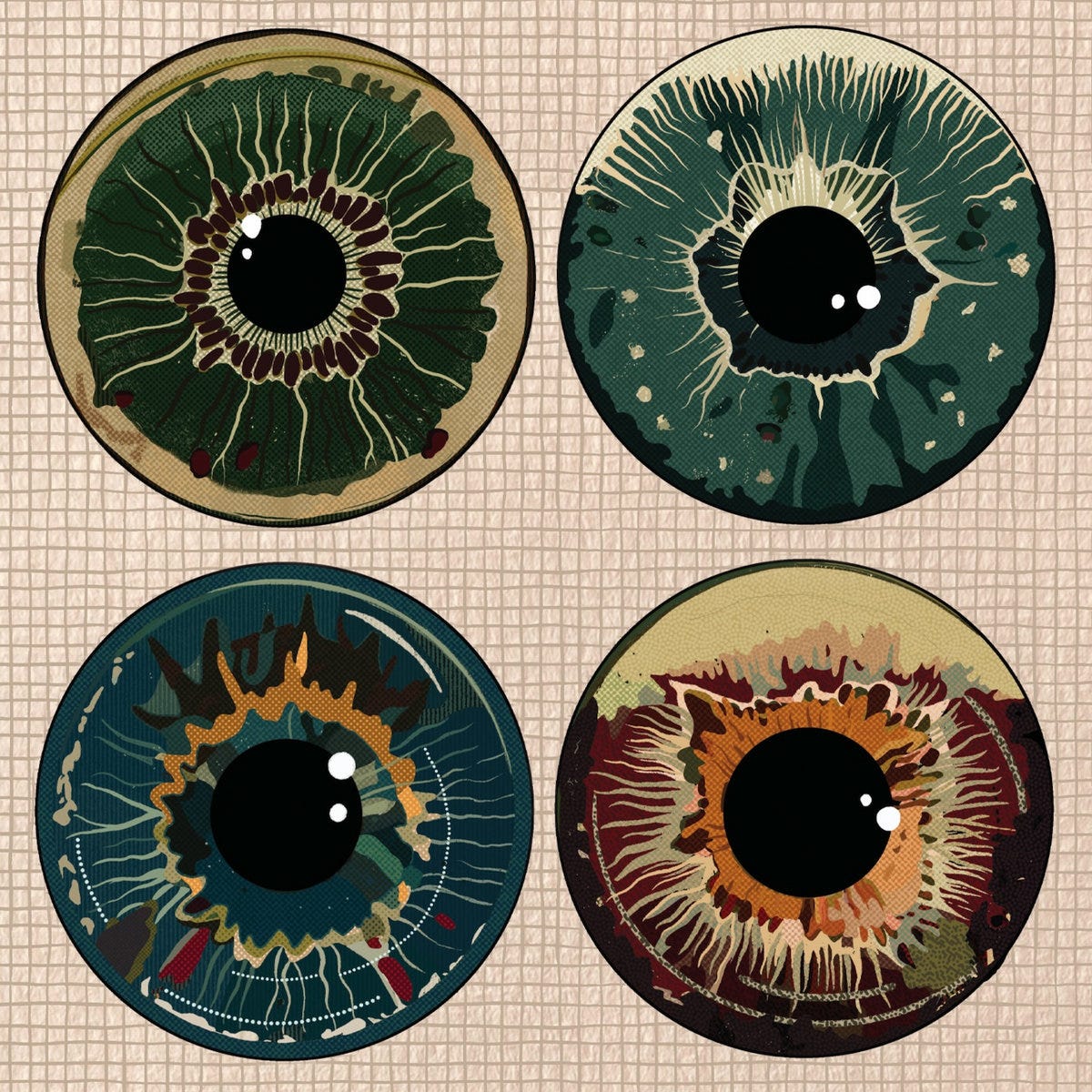
Rachel Beetz – Tone Keepers
Rachel Beetz proves you can literally play feedback on the tripped-out flute electroacoustics of Tone Keepers. Pushing the limits of what the flute is capable of, Beetz shows what creativity can do to what is traditionally a delicate instrument. The different titles reflect the deliberate constraints she places on her instrument. A deep understanding of digital techniques reflects her growth from her official unofficial debut in 2022. Yes, the actual name of that album was unofficial, which was confusing, but it was released on a Los Angeles-based label owned by Daniel Rosenboom. On that album, the noisier aspects, the thudding sounds, were at the forefront. Tone Keepers has Beetz evoke the flute’s delicate side, but in her distinctive fashion.
Each track is a different tactic. With the opener, Gate, she strips away the melody, leaving a utilitarian approach. All you hear is the purely physical; the space in between notes is amplified. The notes themselves are stripped away. I am immediately reminded of Bendik Giske’s self-titled effort three years ago. Beetz goes much further with the reduction than Giske ever did. Here, the breath work, the key-taps, are the mainstays. Maybe Giske did not have access to the same level of technology, the same sensitivity of the gate that Beetz created. To Beetz’s credit, she has an extensive background in electronics. Anybody who name-drops my beloved ARP 2600 has earned my respect. Also, having the confidence to do this, and this is the opening track, is doubly impressive. Gate clocks in at the shortest length of almost seven minutes, so it’s virtually dancefloor-ready if a dancefloor consists of clicks, hiss, and breath work. Given how early the aughts had the Clicks & Cuts Series from Mille Plateaux, this is not a huge leap for us to return to similar sonic terrain decades later. Consider it a revival.
Melody exists on the remainder of the tracks, and the taps from the opener work double-time as rhythmic elements when the flute needs a breather. Feedback is my personal favorite. I like the wooziness of the sound design. Devoted to a misogynistic sound guy, it proves how ugliness can inspire bliss. Extremely sparse, it feels akin to Sachiko M deciding to throw away her no-input mixing board and take on a late-career shift into becoming a flutist. Ugliness and dislike have inspired countless works of art. Look at how Stars of the Lid suffered through an asshole who happened to be a vegetarian back in 2007. For this total tool of a guy, they titled one of the most soothing works with the caustic title of December Hunting For Vegetarian Fuckface. Among the key-taps, there is an almost tribal rhythm anchoring Feedback. This is a demanding listen, difficult for sure, but it combines noise, improvisation, and ambient. Where it lands depends on your mood and how you choose to hear it. Ending things with an extended drone is the Line Label reference of Reverb, with some exquisite orchestral flourishes from a single instrument.
The first solo Beetz release with a physical, tangible product, in this case, the humble cassette, the Outside Time Label lovingly releases this from the currently under artistic siege area of Washington, D.C. Fascinating, expansive tracks that are surprisingly accessible despite the flute’s renowned prickly reputation, these are soothingly strange mirages of other worlds that just might exist Outside Time.
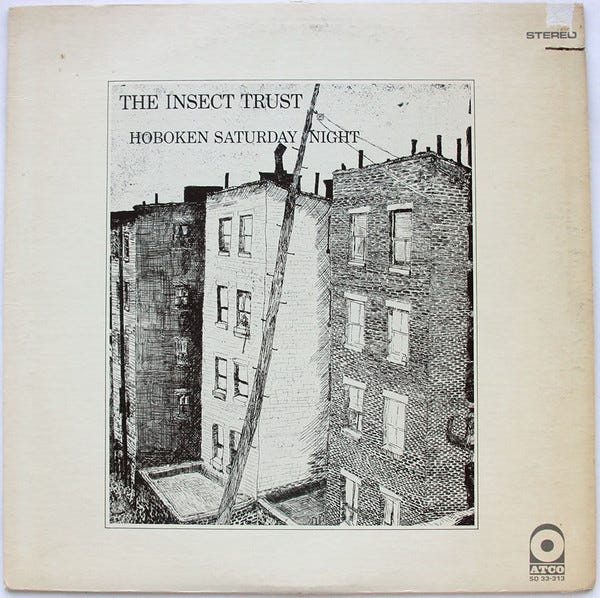
The Insect Trust – Hoboken Saturday Night
The Insect Trust expresses the purest joys with Hoboken Saturday Night. A long-lost hippie time album, perhaps even more lost than the average hippie, the happiness is infectious. Lyrics are pinched from Thomas Pynchon, one of the member’s six-year-old daughters, and found bathroom stall graffiti, specifically the famous unattributed poem that begins with “Here I Sit Broken-Hearted.” Of course, only two out of those three things are true. Try to guess the untrue one, and you’d be very surprised.
Gentrification hit this group hard, even when New York City was not all that particularly expensive, especially in the late ‘60s and early ‘70s. Originally from Greenwich Village, they emigrated to the promised land of Hoboken, New Jersey, which gave the album its title. One of the first bands to emigrate from New York City to New Jersey, they established serious New Jersey street cred by being generally unclassifiable. Are they jazz? Despite multiple trumpets, saxophones, and a swinging spirit, no, they are not. Nor are they folk, even with this many people possessing fiddles, banjos, flutes, etc. They are very much their own thing, unlike things that came before and came afterward. If they were attributable to anything, it would be the blues as well as one of the first traces of the freak folk genre that would come into bloom about three to four decades later.
Completely unworried by commercial success, they essentially did whatever the fuck they wanted. Far away from the commercialized corporate hippiedom taking roost in California, this was a different strain, much mellower. Even with the group’s name taken from either a William S. Burroughs novel (pretty hippie) or a poetry journal (way more hippie), they took jazz and applied it to rock, or vice versa. This was well before Steely Dan would do that, in a more polished, equally William S. Burroughs-namedrop demeanor. Because their energy was very different from the Boarding School references and Westchester-name drops of Steely Dan, they perhaps could only keep this level of sheer exquisite loveliness for two albums.
To call this predictable is a lie. It is a pure discovery of whatever they have stumbled upon. When I listen to this, I think about the humanist creativity that good parents imbue in their children. Each One Teach One works as a mantra for the group, too, because the interplay is inspired. Everything about the sound, from the decidedly lo-fi nature to the who-knows-how-many drummers they employed (it was a lot, you’ll literally lose count) to the sing-song vocal delivery, feels beautiful. I do not know what the musicians were paid in, but it was probably some weird intangible thing like smiles and sunshine, because that is how it feels. Songs have nothing in common with each other besides this sense of love. Fanfare is too prevalent on some of these tracks. Vocalists are all over the place, going from hooting and hollering to the psychedelic musings of Jefferson Airplane. All of it works, for reasons that remain unclear, and thank goodness for that. Fortunately, after the band’s dissolution, many of its members found themselves absorbed into the lifeblood of the world. Robert Palmer as music editor at the New York Times, and Nancy Jeffries as a record executive.
Listening to the Insect Trust’s swan song of Hoboken Saturday Night is enough to completely restore one’s faith in humanity.
Questions, Comments, and Concerns:
Please email me at beachsloth32@gmail.com
Want to support me financially?
Please PayPal me at beachsloth32@gmail.com
Throne
Throne | Beach Sloth | My Wishlist
**Your idea of a reasonable person, music-wise, I’m sure, differs from mine. **Still, if you’re already here, you’re already unreasonable by sheer virtue of your attendance, and I thank you for that. **
Last.fm