
05.12.2024

Good Evening,
This is Beach Sloth. Below are this week’s albums:
· Editor’s Note – Moving forward, anything that is abnormally loud and noisy beyond what a ‘reasonable person**’ would subject themselves to will be prefaced with a *Volume Warning* Thank you.
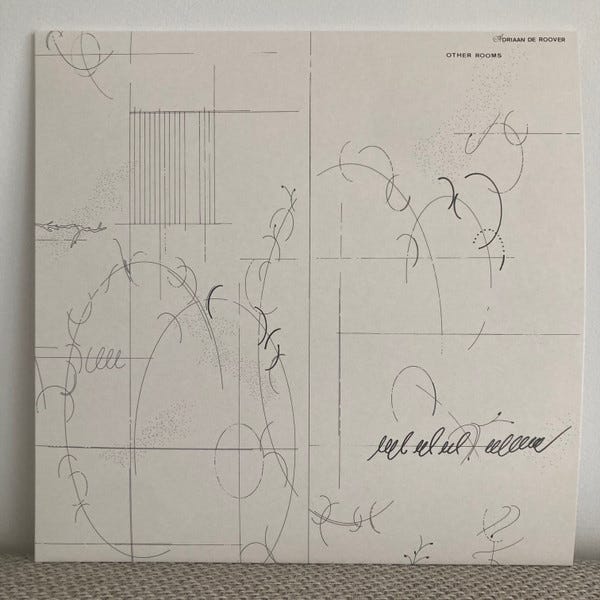
Adriaan de Roover – Other Rooms
One of the more mysterious albums I have heard in quite some time, Adriaan de Roover creates a beguiling mix of white noise, classical, ambient bliss, and found noises with Other Rooms. Everything about this has question marks over it. What other rooms does Adriaan refer to? Is this a reference to Alvin Lucier’s room, which he was sitting in, which is different from the room you are sitting in? The cover art makes things even less clear – fragile sketches of who knows what. Finally, Adriaan's coming from Belgium leads to the biggest question. What is Belgium? It is not good enough to be the Netherlands or France, and it is a little slice of New Jersey nestled in Benelux. The state of Belgium is so bleak and dire that the Netherlands and Luxembourg let Belgium go first in that name. Even the European Union chose Brussels as its capital since it wasn’t doing much of anything else.
The album runs quite the gamut at a lean thirty minutes. For this duration, it feels perfect; nothing is overstaying its welcome. Duration is an essential element of the somewhat cryptic aspect of the work. Previously recording under the alias Oaktree, with this moniker, I guess his actual name, he goes for an even more refined take on electronic music. A lot of the sound is sculpted. What level of sculpted – those who appreciate some of Jon Hopkins’ undeniably elegant sound design will find a lot to like here, as there’s that same stately, timeless grace that ties it together. Individuals familiar with early Terre Thaemlitz, before they devoted themselves to sociological tracts, can hear some similarities. Like Terre, Adriaan incorporates the field recordings so flawlessly that it seems he composed the music after hearing the initial sounds, a composition based on the natural world. This is experimental music with soul. Even those less adventurous ears will find this rather beguiling listening.
Glitches, darts, and shockingly slow-moving glacial symphonies come forth. It is hard to tell which is which, as he veers periodically between many styles. Aspects of this goes through a variety of different layers. Rhythms exist in this pastoral way, and there’s something ancient about how he goes about things. This gets so inherently lovely I’m reminded of Vladimir Ussachevsky. He embraces a dreaminess, a surrealness, that is quite touching. On a more contemporary kick, some of the output resembles early Oneohtrix Point Never’s subtler, drone-based pieces. By doing all these things, Adriaan delves into half-forgotten moments. A narrative exists within these pieces, but it remains almost impossible to determine what it is saying. He gives just enough to show there is a strategy, an idea that ties these together but ultimately leaves it up to the listener to determine precisely what that is.
Cleverly released on the Dauw label with artwork by graphic designer Femke Strijbol, the release has a haunting quality in every aesthetic form.
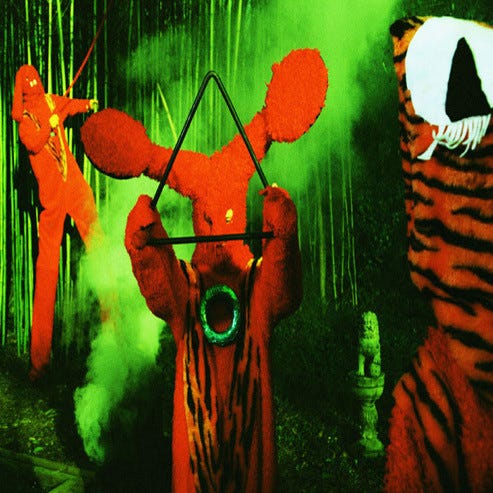
Melted Men – Fangs Alot
The Insane Clown Music genre has never let me down, and it continues to inspire me with Melted Men. Their album, Fangs Alot, is a unique blend of sounds, seemingly composed with random items they had lying around the house. Plunderphonics, a lo-fi aesthetic, tape cuts, cowbells, synthesizers they bought at dollar stores, and samples from 1950s educational records create a maddening yet intriguing musical experience. Their live shows, which they've even performed in public restrooms, are not to be missed. This unconventional approach to music is reminiscent of the world-famous Yximalloo, who once performed a gig at a Honda factory in Japan. Given that the Melted Men are from Massachusetts, they probably performed at a Dunkin’ Donuts bathroom. To my knowledge, no Honda manufacturing plant exists in Massachusetts.
Think of Black Dice gone a level of DIY that you could not possibly begin to conceive of, and that gets you far, but not the whole way. Predating Black Dice and starting in the mid-90s, they’ve spent a while getting their sound perfect. They manage to craft out some mighty grooves for all the hijinks. The grooves include the sounds of gargling and burping, which would fit them in nicely with the Schimpfluch crew out in Switzerland. Unlike the Schimpfluch crew, I imagine the Melted Men are functional human beings who can do everyday things like hold down actual jobs, use bathrooms (as exemplified by their ability to perform in them in an artistic and practical sense), and not be disgusting 24/7. But right on the periphery of nearly all the songs is depravity, gross-out humor, and aspects of the sillier side of industrial music. I know a lot of industrial music goes for that po-faced, deathly series expression, but there are exemptions to that rule, and Melted Men proves it throughout the journey.
Fried Shrimp is by far the highlight of the album. A sample saying plastic fried shrimp is teased out with cowbells, which they utilize liberally, alongside elements of sudden funk samples that cut out immediately. None of it makes any sense, nor should it. Some more accessible moments sample a singer rambling on about long-haired Yankee Hippies. I imagine this is at least a nod to their oddity and origins. With Spit Cups and the warbly Procession (among many others), they even touch upon a strange post-industrial tribal groove that Black Dice would copy and paste all over their 2005 Broken Ear Record. When they sing, they go for a Gibby Haynes level of vocal distortion without the expensive effects. Most impressive is the finale, where they take on a much more avant-garde approach with much more in common with Zoviet France than anything that came before it, showcasing their versatility and musical prowess.
Released by themselves on Nerve Rust Records, a label set up exclusively for their releases (which makes sense, given the somewhat limited market for this), Melted Men shows experimentation's fun, playful side. They present an alternative to the tortured artist who makes horrible, grating noises—these are horrible, grating noises with a smile and a strong sense of humor. Campy and boundary-pushing, this is a hearty brew of oddity.
*Volume Warning*
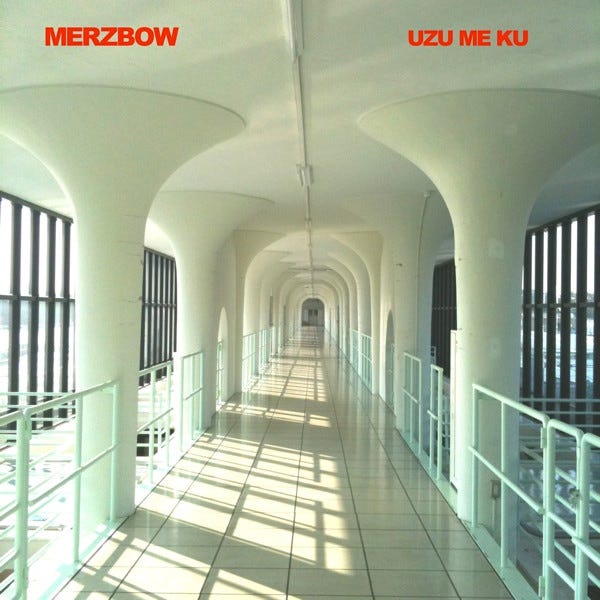
Merzbow - Uzu Me Ku
For the one person in the back who is unaware of Merzbow, it is a long-running noise project headed up by Masami Akita. Before Merzbow, one can safely assume that Masami was a productive member of society. After Masami heard the siren call that was noise, he became intent on essentially jump-starting Japanese Noise. There’s probably a Merzbow release called Siren Call or something of that nature, at least a track or two. Now, living high up in the hills, tending to his chickens, putting out an album every week or so (I’d like to say this is a joke, but it isn’t. It’s the truth), he’s nearing 70 with hundreds of albums under his belt with no chance of stopping. Due to Merzbow's extremely prolific nature, it can be not easy to sort them out. Hundreds of releases ensure that not each one will have the same effect. Fortunately, Uzu Me Ku holds a special place as one of his more out-there and memorable releases.
The duration deserves special mention. Merzbow is not known for brevity – songs can go on for an hour, with many albums going for multiple discs. Compared to that, Uzu Me Ku clocks in at a lean under 40 minutes. Aspects of this album also incorporate a handful of unusual sounds and excellent production. Including a 13-string koto (a Japanese zither instrument) proves essential in the shocking, melodious aspect. Now, this being Merzbow, it’s still plenty of noise, but this veers into some krautrock territory at times, especially on the first track, the opener and highlight of the collection (in my view) Uzume Hikoyuzu, translating to Spiral Generating in English. I love this track; it is downright beautiful and reveals precisely how noise and psychedelic music coexist, with noise being the logical conclusion of the early psychedelic experiments. For those who disagree, I’m sure the Velvet Underground’s Sister Ray is easy listening.
Uzume Hikoyuzu starts with a pulsing groove/rhythm that continues throughout the piece. The industrial edge has a panic-inducing siren that also refuses to let up. He creates this sense of terror within the work. The acoustic koto scraping throughout helps to add to the general mood, as there’s an urgency to how he plays it. Most of the track seems partly inspired by Merzbow’s previous works, specifically the famous Pulse Demon. Outside of that release, the pulse is much more driving, going into Neu! Territory in certain moments. Much like Neu!, there’s an overall speed and attention to detail that requires multiple listens. It remains surprisingly crystal clear for all the chaotic aspects of this piece (which is, in fairness, noise). Layering is necessary, and he ensures that every element retains clarity even as the song progresses. The cacophony within the piece maintains an emotional aspect, and there’s something deeply affecting about the piece, though it is hard to place precisely. There’s a heart, which, for noise, is not always a given but always welcome. Much more straightforward, yet still maintaining that degree of quality, is the much louder and more brutal assault of Itsu Akitsu, translating to the Generating of particles, which continues to include the koto. However, it leans heavier into the noise side of things, though the pulse is still there for much (though not all) of the piece.
Released by the tiny Samboy Get Help! Recordings label in New Zealand, it is a rare Merzbow treat to show a direct relationship with rock’s more unruly side without picking up a guitar. It makes sense that a label in New Zealand would pick it up – they can release whatever they want out there, nobody’s going to stop them. They already house the Dead C and the trance-inducing Roy Montgomery, so why not have some shockingly well-crafted, beautiful, harsh noise into the mix? An alluring blend of noise and fragile textures brought into one with Uzu Me Ku and an outlier (in a good way) amongst Merzbow’s discography.
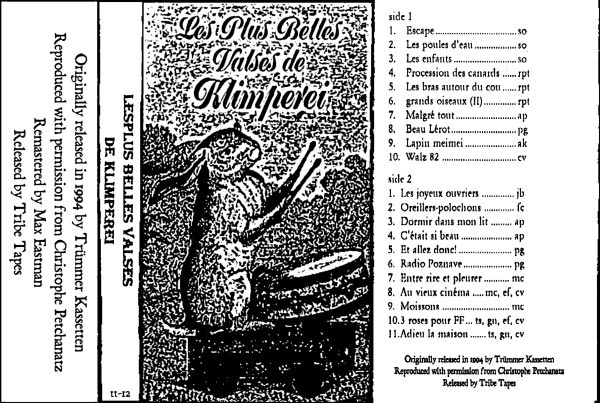
Klimperei - Les plus belles valses de Klimperei
Klimperei kicks it old school with Les plus belles valases de Klimperei. This is so old school that it might as well be kindergarten or even preschool. There's a joy here in employing naïve melodies amongst toy-like instruments (which are literal toys in many instances). Melodies go for soulfulness. Forgoing lyricism altogether, the songs work perfectly alone. Nothing needs to go on for long, and the track lengths rarely exceed the two-minute mark. Pieces do best when they are taken in as part of this much larger whole and treated as suites in a much larger whole. Acoustic and electronic, they do it all quite well.
A duo composed initially of husband Christophe and Françoise Petchanatz, it has since been pared down to a solo project by Christophe Petchanatz of Lyon, France. The duo, whatever happened there? Divorce, one would assume, judging by how Françoise reverted to her maiden name. However, this is not the focus of the music, which is joyous, god damn it! So, let’s engage once more back in the historical details of the release and what it stands for. It stands for oh so much happiness.
In 1994, when this album was released, they were a strong duo. You can hear this in the puppet-show-inspired soundtracks. The cuteness of the album is the main draw. Imbued with this childlike wonder of the universe, the chords feel crisp and move along briskly despite the general lack of percussion. Pastoral in nature, the pieces roll through gleefully. Sometimes, the instruments feel detuned, warped, and weird, and they are better for it. The unpredictability of the compositions attests to their classic timelessness. For music composed decades ago, it remains shockingly relevant, a rare art that works for children and adults alike. Given how much children love experimentation for music and the sadness of having their diet consist of Baby Shark and Raffi albums, it is refreshing to know that there’s stuff out there like this that’s thoughtful and silly at the same time. I am reminded of some of Goodiepal’s earlier works, especially Narc Beacon when he was more interested in the folk aspects of his experimental sound before he went down noisier rabbit holes.
Released by the good folks at Trümmer Kassetten, the cassette culture adds to the album's mystique. Trümmer Kassetten was founded so long ago that it listed its address as “West Germany” for much of its business life. Sadly, the label hasn’t put anything out for over two decades, so this has since made its way to the far more noise-centric pastures of Tribe Tapes. Yes, Tribe Tapes is a cassette-based label, so it makes sense from that viewpoint. Yet something does not sit right with me, having this compilation alongside the likes of Smell & Quim and K2. I like those groups, but they are indecent noise, not this benevolent charming sound, this lovely life.
An outlier for many different genres, it exists separately from contemporary trends (and even from trends from its own time). This is downright gorgeous, sweet, and silly stuff.

Identified Patient – Weeshuis Der Verloren Zielen
For all its happiness, tall people, and world-famous cheapness, the Netherlands exports some dark, brooding, downright evil-sounding stuff. Identified Patient contributes to this fine tradition with Weehuis Der Verloren Zielen, translating into the cheery Orphanage of Lost Souls for non-Dutch speakers. Sometimes, you need to embrace the darkness as a treat to be happy. Beyond Identified Patient, there’s the horror-inducing Gnaw Their Tongues and the nightmare of Stalaggh. Identified Patient is a virtual ball of sunshine compared to those two projects.
There's so much bass and an endless amount of it. If you have subwoofers, they will get a massive workout with this one, so watch your levels. This is nothing but joy as somebody who appreciates the heavy-set bass-laden doom vibe. Beyond the apparent fondness for the low-end, he engages in some delirious hooks. Clubs ought to blast this kind of stuff until the sound becomes physical. Given all the attention given to this production, it is crisp, clear, and the sort of thing that somebody should surrender to because goodness knows that people have surrendered to far less deserving groups.
Outside of the blaring industrial techno ethos, he includes acidic techno and does it well. Acid techno gets a bad reputation as trash, and while that can sometimes be true, some elevate that approach. I can think of Evol, who goes so hard with acid techno that I wonder if there’s something wrong with them. Maybe they need a hug? Identified Patient, aka Job Veerman, may not go that deep down the rabbit hole, but there’s a similar desire to bring acid to a higher level and make it stately. Ever so beautifully, he takes the tiniest of details, a hand-clap here, stuttering samples there, and transforms them into this harrowing paranoid vision. This is not complicated music, but he imbues a mysterious aura within each work.
He does not overstay his welcome, either. Tracks range from five to seven minutes; the EP lasts twenty-five minutes. Everything he needs to include, he does, and the minimalism alongside the throbbing bass makes the whole thing strangely catchy. The bass again—I must implore the listener that this is extremely heavy. I’ve heard dub albums with less bass than this, so it is a pleasure when things are this well done.
Pinkman released this little EP. An excellent label in one of the Netherlands' most techno-friendly cities, Rotterdam, came out, and people adored the thing. Usually, Pinkman has pretty high standards, but then they outdid themselves just a smidgeon with this little treat. I’m sure there is no city more techno-friendly than Rotterdam, as basically, that’s all there is, besides a commercial port and human beings.
This well-constructed EP is a mix of darkness, confusion, and paranoia—the sort of thing to put on when your mood is dark and evil-oriented.
*Volume Warning*
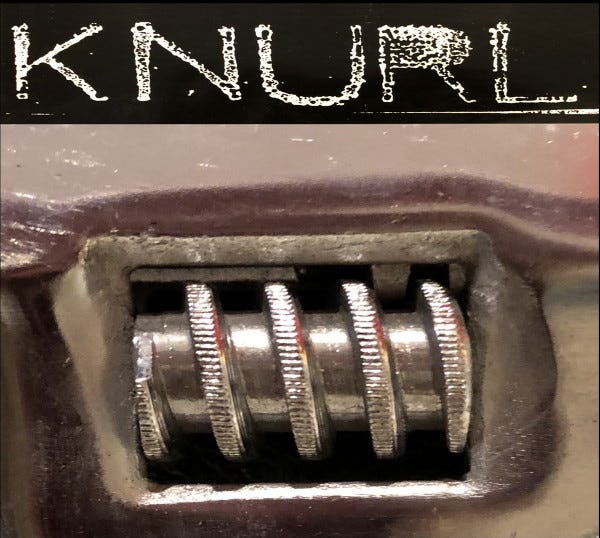
Knurl – Cryocarbazine
Canadians are typically regarded as warm, friendly people who never hurt a fly. Yet, underneath their soft, gooey exterior hidden is a violent force descended from the Vikings that settled Newfoundland centuries ago. This tends to be hidden, this violent, bloodthirsty impulse, a desire for blood. Occasionally, the world catches glimpses of the ferocious nature of the Canadians and who they are. Poutine wrecks some violence on the intestines of lesser beings. Beyond that, there’s the sheer onslaught that hockey games bring out of Canadians. Even the most down-to-earth Canadian will rip your throat out if there’s some firmly held hockey belief that you have been unfortunate enough to unearth within their generally subdued psyche.
Alan Boor’s Knurl project presents that level of anger and intensity. Over an astonishing 140-plus releases, he’s captured a brutality that few noise musicians get into. I know I reviewed Merzbow in this latest batch of album review correspondence, but this makes Merzbow sound like Lambchop’s Play-Along. Originating back in the early 90s, 1994 to be precise, Alan Boor delves into a level of harsh noise and physicality matched by a handful of musicians (if you want to call them that). Macronympha, Government Alpha (whose label Xerxes has released some of Alan’s albums), and maybe a few others meet this level of cacophony. Macronympha is an apt comparison, as they handle raw metallic noises, and this album Cryocarbazine comes from bowed stainless steel. Do you want to know how it sounds, however? Well, in a word, it sounds ungodly loud, like there’s no god here. This is devil music as he sharpens his axe, ready to decapitate you, but at least he’s nice about it and wants an excellent clean cut to lob it off. Mock the devil all you want; he is considerate about chopping your head off with a clean blade.
It is not quite a harsh noise wall; it has some more nuance than that, but just barely. You’re given no light introduction either; he sets you off in the thick of it. So there’s no sudden increase in volume. Just boom, you are there, and you must deal with this. Of course, you could choose not to; nobody’s forcing you to listen to bowed stainless steel noise. However, I am fascinated by how this sound evolves—making the best of the situation you should surrender to. You cannot make sense of this; the aptly named Alan Boor would not want you to. The point is the noise; getting engrossed means you can reach that sonic nirvana that comes by letting the environment consume you. For me, the latter half of the album is the revelatory experience – as the depth begins to emerge, showing you how capable he is of sculpting noise (and the fact he’s a sculptor only makes this metaphor even more apt). On the flip side of Alan Boor’s personality is the far kinder and gentler approach he uses in his ambient project Pholde because he contains multitudes – the harsh and the soft, together.
One of the first releases of the now well-established Rural Isolation Project label, it has a psychedelic, feral gleam to its eye. Knurl takes no prisoners.
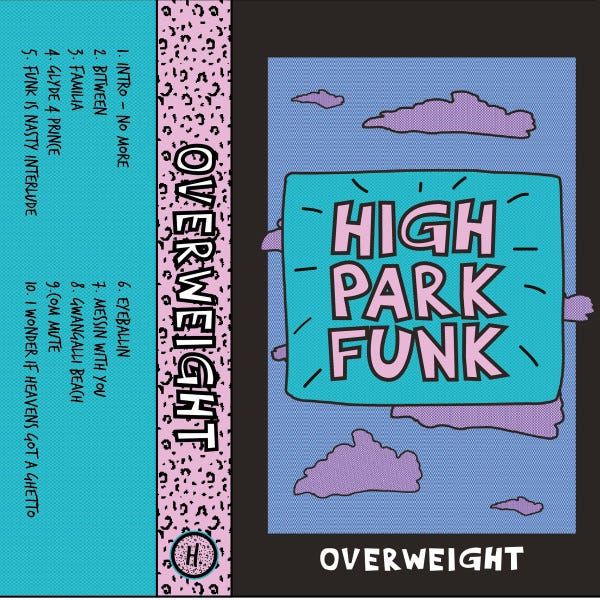
High Park Funk – Overweight
G-Funk from one of G-Funk’s capitals, Glasgow, Scotland. With a tiny profile, High Park Funk has carved out an approach like Dam-Funk’s in California or, on the other side of the fidelity range, that of Com Truise of New Jersey. The vocoders, minimal set-up, and attitude are all there. While this may not be up to Dam-Funk’s level of quality, it certainly has a low-key playfulness that makes up for that. Unapologetically lo-fi, the album was released on the equally tiny label Handpicked Cassette Tapes, conveniently located out of Glasgow, Scotland. True to its word, Handpicked Cassette Tapes released this on what else but marvelous colored vinyl. Just kidding, it was a cassette tape. Additionally, Handpicked Cassette Tapes also appears to delve into the G-Funk/DJ side of things, as this fits the general aesthetic of the label, primarily that of indie nostalgia gazers.
The album keeps things focused. Each song is at most five minutes, most ranging within two to three minutes. For the most part, these are not heavy-lifting sorts of songs. He keeps the sound rather basic, with some lovely square and saw waves added for good effect, with gleaming jazz-inspired chords to add a little diversity into the mix. Rhythms keep things sunburnt and laid-back, as none of this has much of a challenging presence. Much of the approach lends itself well to a disposable listen side, from the plastic that it travels to the Bandcamp that continues to host the project, itself decorated in long-forgotten early 90s vibes, like a long-lost GeoCities site. In the few moments that High Park Funk includes samples, it is more for mood than to say anything all that deep. No vocals, no lyrics, the songs don’t go anywhere, but then again, they never feel the need to.
A few of the moments on the album lean into the aesthetic a little too heavily, with one of the tracks going for the 4:20 range because of weed. High Park Funk continued in a limited capacity from this album, putting out only a few additional singles and two mixtapes, a few of which got a physical release. Overall, this is not a thoughtful performance; it is all about the vibe, which is mellow. While it certainly goes for the lazy, given the lack of ambition the album sets up for itself, it is hard to criticize it too harshly, as its primary goal seems to explore an almost wholly forgotten sound, and, for that, it is relatively successful.
Questions, Comments, and Concerns:
Please email me at beachsloths@gmail.com
Want to support me financially?
Cash App (this allows me to buy food, headphones, and assorted clothes so I may dress appropriately in public):
$beachsloths
** Your idea of a reasonable person, music-wise, I am sure, differs from my idea. Still, if you’re already here, you’re already unreasonable by sheer virtue of your attendance, and I thank you for that!
Last.fm