
08.24.2025

Good Morning,
This is Beach Sloth. Below are this week’s albums:
· Editor’s Note – Moving forward, anything that is abnormally loud and noisy beyond what a ‘reasonable person**’ would subject themselves to will be prefaced with a *Volume Warning*. Thank you.
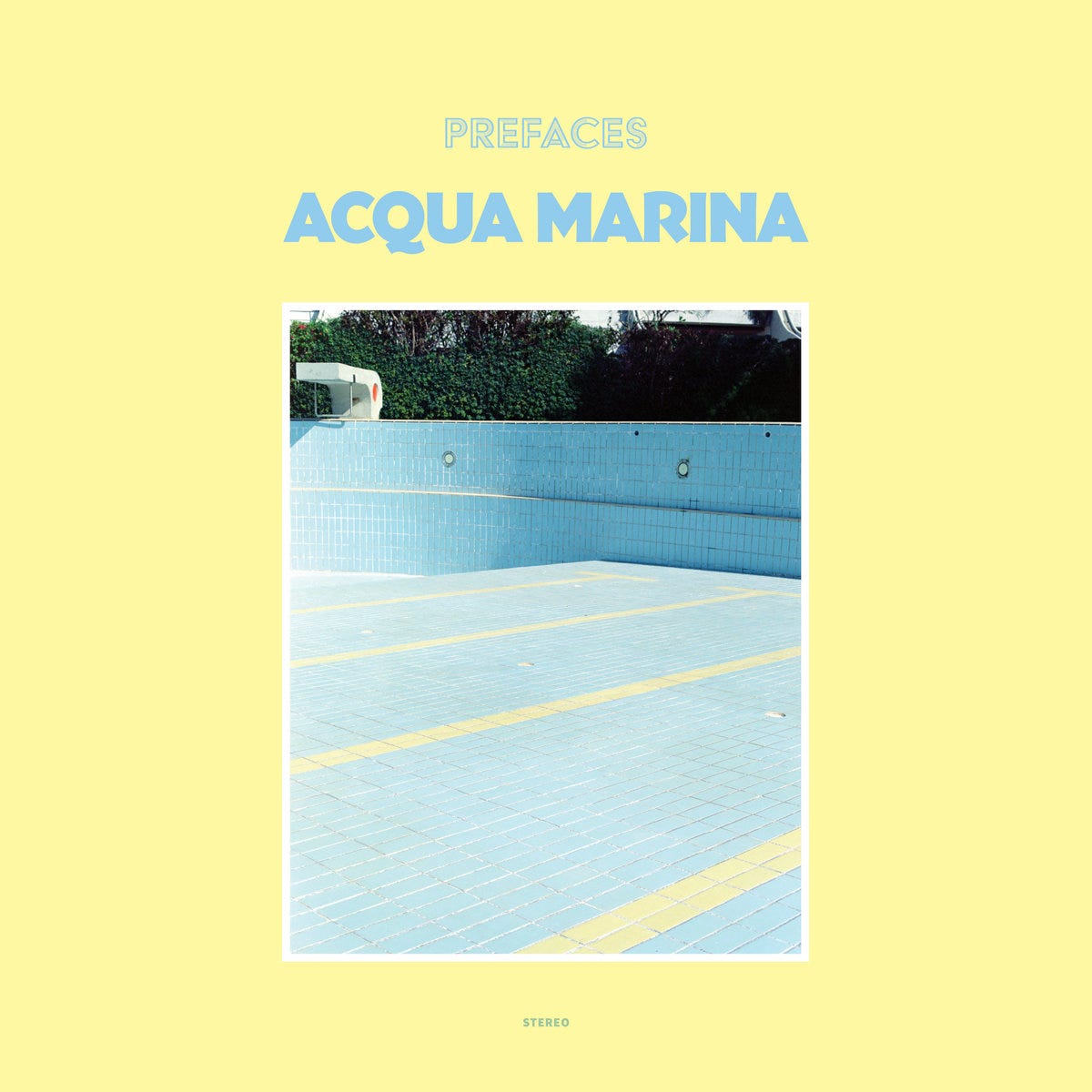
Prefaces – Acqua Marina
The summer season feels like it’s fleeting. In a way, it is. Lasting a few months, the short duration has a melancholy quality for those who have lived in towns catering to beach crowds. Places like Maryland’s Ocean City, New York’s Rockaways, and the whimsies of southwestern Michigan’s tiny beach villages have an allure. At least those are the places I’m aware of. I’m sure there is more, but I do not want to speak about a place I have never been. Yet, when all those people have left for the season, there’s the rest of the year to contend with. Beaches, rental properties, and the autumnal foliage stab at the heart, evoking memories of larger crowds and more life, instead of the reminders of emptiness and stillness.
Prefaces do a fantastic job in capturing that pining quality of seeing summer slip away, with the vastly unused areas left empty. The album art of Acqua Marina reflects this with the empty pool. Melodies throughout harken to this quality, from the very competent blend of surf rock and jazz. Unlike their previous outing and debut with Hippodrome, this is a much more polished affair. While the nods to spaghetti westerns are no doubt strongly there, and the surf rock flavor is evident, this feels refined. I would say that they have expanded their midcentury appeal with this one. Going for a much more polished quality, I am reminded strongly of the postmodern chops of Stereolab (thanks for returning this year, guys, much appreciated) as well as the dreamy, lovely whimsy of Penguin Café Orchestra. Like the latter group, Prefaces incorporates elements of world music with a tasteful hue, going nearly adjacent with some classical underpinning the arrangements.
A Lebanese group, none of whom sing, yet they do reflect strong personalities. You can tell that they have a genuine passion, as evidenced by their enthusiastic comments, such as “great stuff, man,” at the end of Mallifa. For an instrumental trio, they tap into a '60s psychedelic flavor. Going far beyond the debut, they incorporate pieces of Bossa Nova, jazz, and reflect upon the proud tradition of Middle Eastern contributions to music. In fact, it is fascinating to see how they reflect upon the Middle Eastern scales that are the foundation of surf rock. Dick Dale, the King of the Surf Guitar, was of Lebanese descent. Hearing his echoes within a new generation, and the inspiration the group clearly takes from his output, is no doubt joyful.
Unlike their debut, this has a different spirit. Some of the edge is gone from that original, replaced instead with a jazz/rock fusion that would not be out of place on a Tortoise record. The number of jazz/rock bands out of Chicago is a whole other thing, but honestly, they do seem at least to take cues from that side of the rock spectrum. Sometimes the songs achieve a trance-like status, as seen in the constant shift of the same theme throughout Lekkos Ramie. For whatever reason, this piece feels like the darker yin to Frank Zappa’s Peaches en Regalia yang. Whereas Frank Zappa sped that thing up to an almost cartoonish degree, here Prefaces takes on the theme, constantly changing focus. The rhythms have a steady, library music quality, with the percussion kept extremely minimal. Far from fanfare, this instead has a more contemplative, subdued aspect, yet possesses a quiet spirit of wonder throughout.
Every musician within Prefaces has about a half dozen bands/musical endeavors associated with them, and it shows. Charif Megarbane, Salm Naffah, and Pascal Semerdjian come together quite nicely, which makes sense given the easy way they met. At bowling alleys, independent record stores, these are low-key settings in a place like Lebanon, which is melancholy in its way. From looking at political gridlock and the inherent beauty of the place and people, there’s a stark series of contrasts. The music reflects this reality, with a comforting midcentury flair alongside a nostalgic lens that makes it the sonic equivalent of being just out of time, into something classic. A beautiful record, one full of rich emotions that are so subtle that they virtually demand a re-listen.
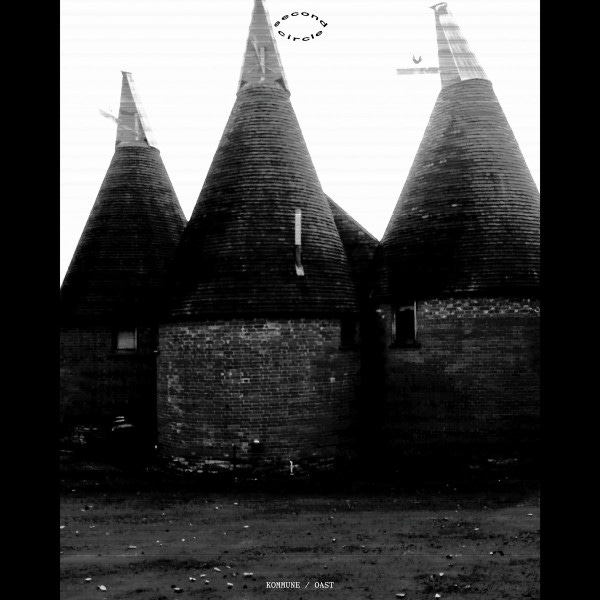
Kommune – Oast
For an electronic album, there is something undeniably ancient about the sonic artifacts of Kommune’s Oast. I keep returning to it as the sound does feel genuinely mysterious. The sense of geography is strongly there, right down to the cover art of oast houses (apparently a building to dry hops, I’m not English and I don’t drink), and I think the sense of place adds to the inherent charm. Despite each of these four pieces clocking in at around the twenty-minute mark, I never feel bored. The trio of George Thompson, Kyle Martin, and Jonathan Nash has its storied histories of sonic exploration. Still, here they play off each other’s talents to deliver this slow-moving, hypnotic drive that’s like Krautrock but given that brooding, Andy Stott tempo. Aspects go for this slow trudge through the countryside, and the rural imagery of the cover art fits the atmosphere well, down to the grayscale photography.
Kommune’s Oast is like Zoviet France as remixed by Basic Channel. Parts of the approach do have an inherently psychedelic, rural industrial ethos. They use analog equipment, unabashedly, and the improvised nature of the pieces is obvious. No overdubs, no nothing, and it makes sense that they had live performances before they came together to make this – the way they play off each other’s gestures is genuinely curious. Even more so, the duration of the tracks and the slight tweaks to the atmospherics give way to the massive slabs of sound Basic Channel pumped out in its heyday. You can genuinely get into a sort of trance by surrendering to the expansive, seemingly endless sound. Rather than being random, they take on small themes that reverberate in the vast cavernous space, becoming almost suffocating in certain angles. The best thing to do is to space out these pieces, to get a sense of the enormity that is going on, because the layering of the many elements feels beautiful.
Stylistically, they cover a lot of ground. On the more acidic tones of the opener, they feel akin to where Autechre could have gone had they stayed analog and sworn off the endless digital rabbit hole they eventually embraced. Throbbing dub bass gives the second piece an early 90s aesthetic, with the sparkling, shimmering glows making it almost yearning in terms of the mood. Production-wise, the sound is crystal clear, and again feels timeless, like I’m listening to something from earlier in the Warp Records catalog. Extremely heavy, almost Pan Sonic-like precision, takes shape with the stripped-down, bare-bones ethos of the third piece. Occasional chords come out of the very heavy frequency, and for anyone with a good sound system, I recommend blasting this one. Underneath the minimalism, the trio appears to be in some cryptic conversation amongst the machines, making the work feel nearly voyeuristic. On an almost dance-like kick, the finale has a ritualistic, mystical element that is downright creepy. Maybe those oasts in England were a place where more than hops were dried, who knows?
Sadly, this remains the only sonic document from the project. Fortunately, the three of them have an extensive discography of equally fascinating works behind them, from Thompson’s Hipnotik Tradisi, to Nash and Martin’s Land Of Light. Music From Memory did a fantastic job with the mastering, and it does feel like you are with them, taking it all in. This is the sort of thing that feels organic despite being in the very electronic side of things, in short, exactly everything I could want from an electronic album, conjuring spirits music indeed.
*Volume Warning*
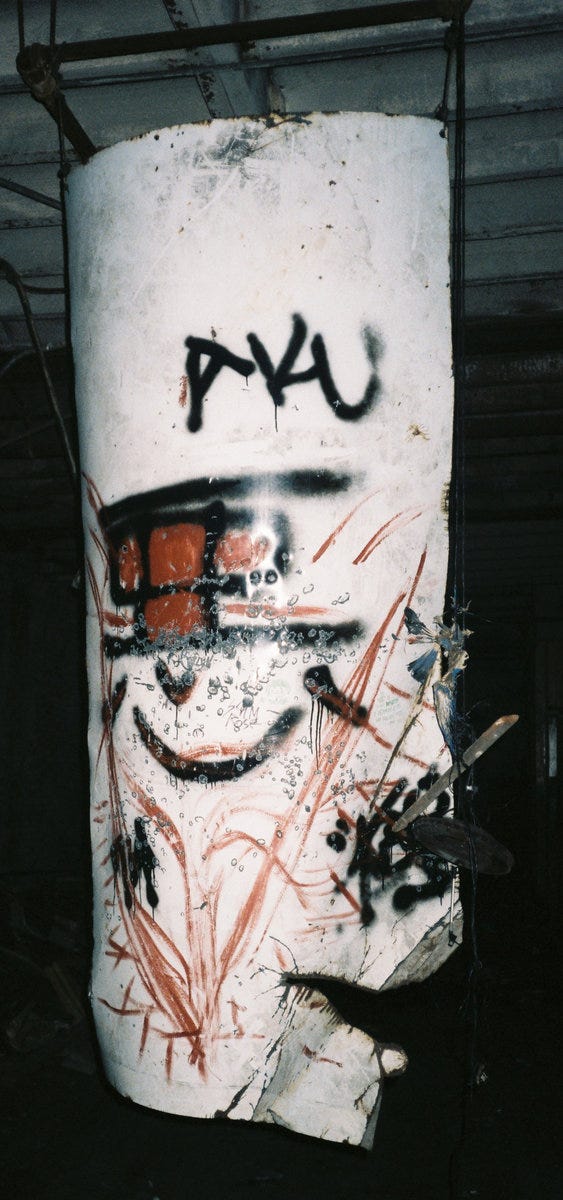
Aku - Toward The Flat Horizon
Squat life forever. I spent a lot of my childhood reading about squats. They were an essential part of NYC culture. A handful of my friends lived in them/started them up. Now they no longer exist, but they catered to the beloved spirit of the lowly Gen Xer. Any story that included squatters always interested me. They still do, though the stories are rarer and come from a longer time ago. Only much later did I realize that music was associated with these reclaimed spaces. You can still stumble upon squats in Europe, Christian Town in Copenhagen being one of them, although there were famous ones in New York City, such as ABC No Rio and C-Squat.
C-Squat is where Aku recorded Toward The Flat Horizon for much of the run-time, though five other locations are listed within the liner notes. Recorded back in 1993 but released in 2006, the extra time spent getting to listeners was time well spent. Given how squatters typically have little need for money, it must have been something outside the usual, such as the need to be heard, perhaps. The 1993 run had 333 tapes created and distributed among all the fine fellows living that squat life in Manhattan, back when Manhattan could be somewhat attainable for individuals who did not have a seven-figure net worth, at the very least. I remember that time, of wandering around, almost getting hit by ambulances, going to Other Music near Cooper Union, fun times. The way the place felt then was inviting, as if we were all coexisting together.
Aku (which translates to "I" in Japanese) is a unique group. Made up of transients with no desire for fame, Aku is where the ego goes to die. Ego death in particular feels essential when describing the actual music. For an album with only four tracks, they incorporate a wide range of genres. The noise aspect should be kept in mind while listening to it, as they do not go for a simple build-up and breakdown. Shifts are jarring. You could be amid absolutely everything being burned away, and then suddenly silence. I appreciate this exploration of dynamics, which keeps the listener on their toes. I would only recommend that any listener pay close attention to the volume levels, as they are incredibly unpredictable.
The 2006 release date makes sense. While it was recorded in 1993 and there were many analogs to the sound (see Cluster, Cosmic Jokers, Skullflower), it fits in a lot better in 2006. During 2006, the spaced-out cannabis haze of the drone scene received a nice revival in the form of the single one-man team of James Ferraro, also known as one half of The Skaters (James Ferraro plus Spencer Clark). Perhaps it was re-released at that moment, as the environment seemed more amenable to it. Or, just as likely, one of the participants discovered a cassette in an old shoebox and decided to convert it into MP3s.
Unpredictability is a huge highlight. I like the range. Sometimes they stumble upon found sounds that feel reminiscent of John Duncan’s shortwave work. Other moments share a lot in common with early '80s noise releases, as they continue to explore that impulse. The tribalistic elements harken back to the rusted industrial psychedelic mantras of Zoviet France. Whatever path they choose, they keep it abstract.
Something truly from a bygone era – from the cassette-like nature to the communal din, to even the documentation of the spaces, there is a mystical aspect to these randomly assorted noises that feels raw, visceral, and urgently needed.
*Volume Warning*
Hrvatski - Irrevocably Overdriven Break Freakout Megamix
A reasonable person may ask why Hrvatski needed to break up Irrevocably Overdriven Break Freakout Megamix into 91 tracks. The clever person will say – because Keith Fullerton Whitman could. Keith Fullerton Whitman began life very differently from the avant-garde inclinations that he would later pursue. Back in the early days, he was a Berkley College of Music dropout, with a bedroom label given the ridiculous German name Reckankreuzungsklankewerkzeuge, issuing CDs and vinyl, and generally being insane. On a more personal note, he also possessed hair back then, something he has since lost due to male pattern balding.
Hrvatski was where he started in the unexpectedly fertile ground of late 90s drum’n’bass. The way he approached the genre had much more in common with the noise aesthetics of Lesser, Merzbow, and Kid606 (the latter of which Fullerton even remixed on several occasions). Early Hrvatski has this power behind it, and, with the help of beats, he dabbled in more experimental aspects. Within this context, Fullerton shows where he would later go with his work under his given name. For this alias, though, he tended to veer towards the snotty, gleeful aesthetic set forth by Tigerbeat6. Even in these chopped-up bits of percussion and din, the ear for melody is there. Kid606’s similar approach is reflected within the context, as is Dat Politics’ mix of noise and cheery, childlike melodies.
What comes out of these cut-ups? Some of these are reworks of his earliest works, like how halfway through you hear an iteration of Routine Exercise from his '99 release, Oiseaux 96-98. Unlike that take, this one trades in a lot more noise and chaos. Given how close he teetered towards full-on noise blasts, it is unsurprising that he chopped the sound down to mere milliseconds of their life. The evolution from where he was in the late 90s to where he ended up in the mid-00s, before releasing some of his mind-melters (Lisbon and my personal favorite, the 2010 release Generators), is genuinely fascinating to see. Already, improvisation was a major component of his work.
Fullerton would refer to this alias as schizoid, and it makes sense – 91 tracks give that general vibe. The music merely confirms it. It is doubly fascinating to see how so many experimenters started with pure beats before transcending them (Richard Devine’s Autechre-referencing works happened around the same time, albeit in the much warmer climate of the south versus Fullerton’s frigid New England). I also appreciate how much Fullerton represents the best of New England’s incredibly underrated experimental scene, as well as the slow growth that much of it has experienced. This means that the music has ample time to gestate in the public consciousness before it receives a big break.
Big breaks are what this release is about. The speed is an essential part of the journey. Far from being the otherworldly textures that Fullerton would explore only a few years later, it was a nice part of the journey from jungle enthusiast into something far more potent. A lot of fun, though, by no means necessarily essential.
Questions, Comments, and Concerns:
Please email me at beachsloth32@gmail.com
Want to support me financially?
Please PayPal me at beachsloth32@gmail.com
Throne
Throne | Beach Sloth | My Wishlist
**Your idea of a reasonable person, music-wise, I'm sure, differs from mine. **Still, if you’re already here, you’re already unreasonable by sheer virtue of your attendance, and I thank you for that. **
Last.fm